
The Hidden Cost of Fragmented Personal Operations
Discover how disconnected apps create coordination debt—and how a controlled personal operations system can reduce missed commitments and risky work.
Fragmentation Creates Coordination Debt

For busy executives, founders, and independent operators, productivity rarely breaks down because one tool is missing. It breaks down because essential information is scattered across many tools. An email contains a promise, a calendar holds the deadline, a task list records the next step, and a financial app contains a payment reminder. Each system may work well on its own, yet the connections between them remain dependent on memory.
That gap creates coordination debt: the growing cost of keeping commitments aligned across disconnected workflows. A meeting may be scheduled without enough preparation time. A follow-up may remain buried in an inbox after the related task is marked complete. A personal payment may be remembered only because a notification arrives at an inconvenient moment. Over time, these small mismatches consume attention and create avoidable stress. Personal operations become a constant process of checking, copying, reconciling, and hoping nothing important was missed. Workflow automation can reduce this burden, but only when it understands context and preserves control over sensitive actions.
Find the Invisible Commitments and Handoff Failures
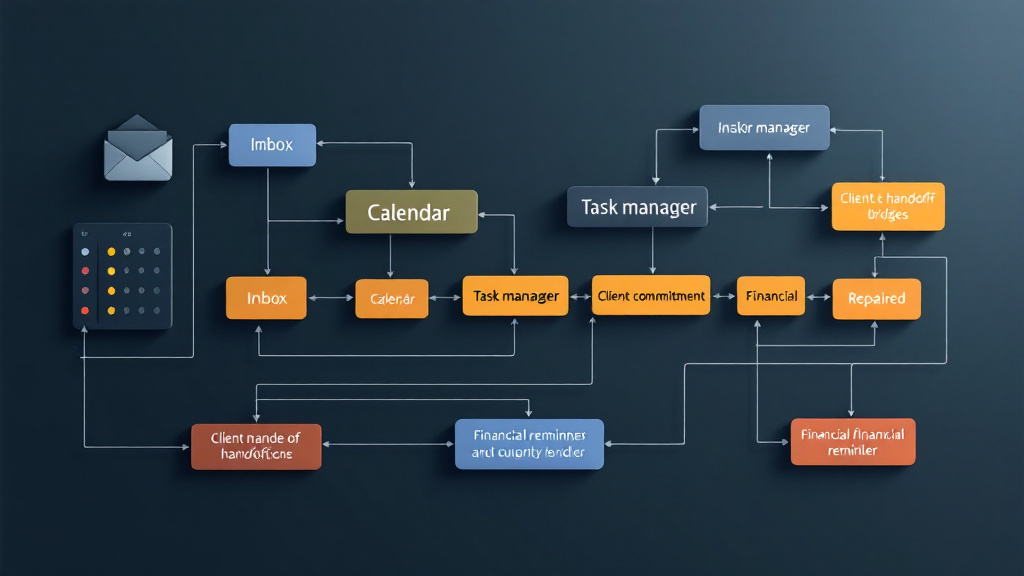
The first step in improving personal operations is to identify commitments that do not have a clear owner, deadline, or next action. Review recent email threads, upcoming meetings, open tasks, recurring bills, and promised deliverables. Look for phrases such as “I’ll send that,” “let’s revisit this,” or “remind me next week.” These statements often represent real obligations even when they never become formal tasks. A useful inventory should connect each commitment to its source, due date, dependencies, and required decision.
Next, examine the handoffs between applications and people. Where does an email become a task? Who checks whether a meeting has preparation time? How does a payment reminder become a calendar event or approval request? Handoff failures are especially risky when information is copied manually, because context can be lost and status can become stale. For executives, this may lead to missed follow-ups or unrealistic schedules; for independent operators, it can delay invoices, renewals, or client work. Treat these gaps as operational risks, not merely personal productivity quirks.
Build a More Reliable Personal Operations System

A practical framework for reducing coordination debt has three layers: visibility, prioritization, and controlled execution. Visibility means creating a daily briefing that brings together priority messages, meetings, deadlines, open commitments, and routine financial reminders. Prioritization adds context by identifying what is urgent, what is blocked, and what requires the professional’s judgment. Controlled execution turns approved next steps into drafts, tasks, calendar proposals, or reminders without silently making externally visible changes.
This is where a conversational executive assistant such as SteadyOrbit can support a safer form of workflow automation. It can connect authorized email, calendar, task, file, communication, and banking-summary services, then present proposed actions for review. Approval thresholds, audit logs, and undo paths matter because convenience should not eliminate accountability. The goal is not to automate every decision. It is to make commitments visible, reduce repetitive coordination, and reserve human attention for exceptions and meaningful choices. When personal operations are treated as a connected system, fewer promises disappear between apps—and productivity becomes more sustainable.